Mobile

Most people don't lack emotions - they lack a way to make sense of them.
Existing apps tend to go one of two ways: too simple, reducing everything to a mood slider, or too demanding, expecting users to journal every day. Neither builds real self-awareness over time.
What was missing was something structured enough to be meaningful, but lightweight enough to actually become a habit.
We ran surveys and conducted competitive analysis across existing mental wellness and mood-tracking apps.
The pattern was consistent - users wanted to check in quickly, but they also wanted to look back and see something useful. The tools that existed made them choose one or the other.
That gap became our design direction: build for the daily habit first, and let the insight emerge from consistency over time.

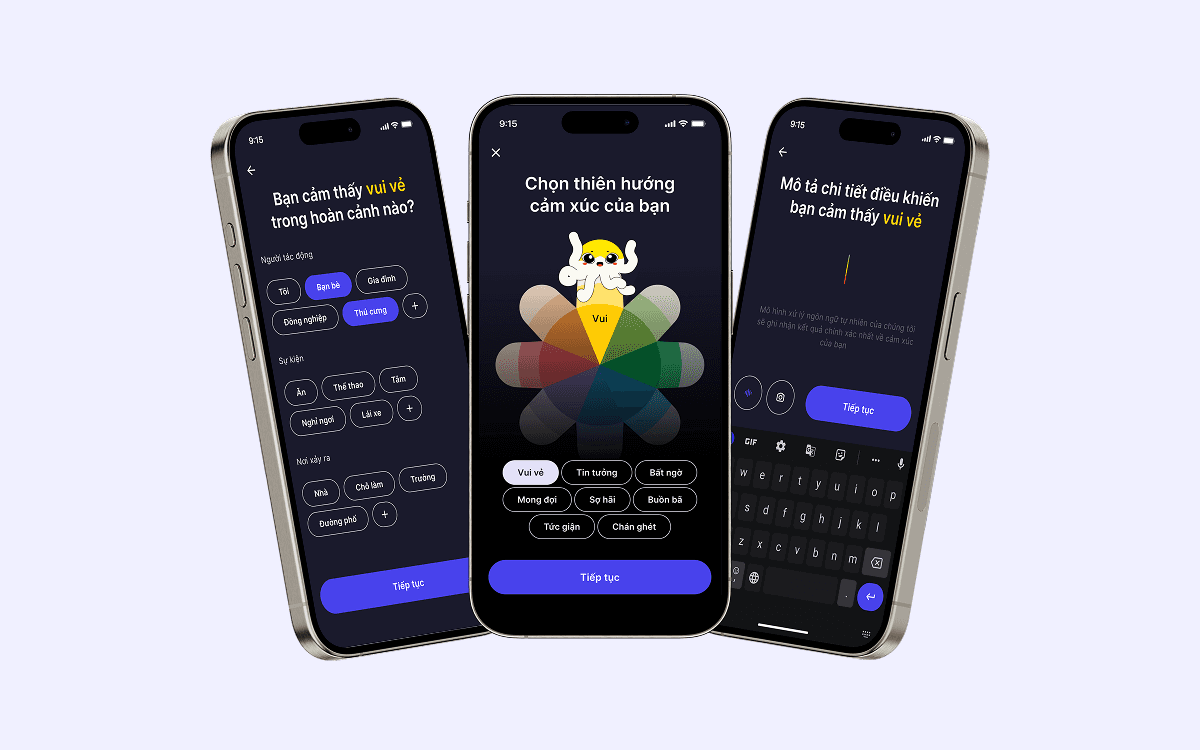
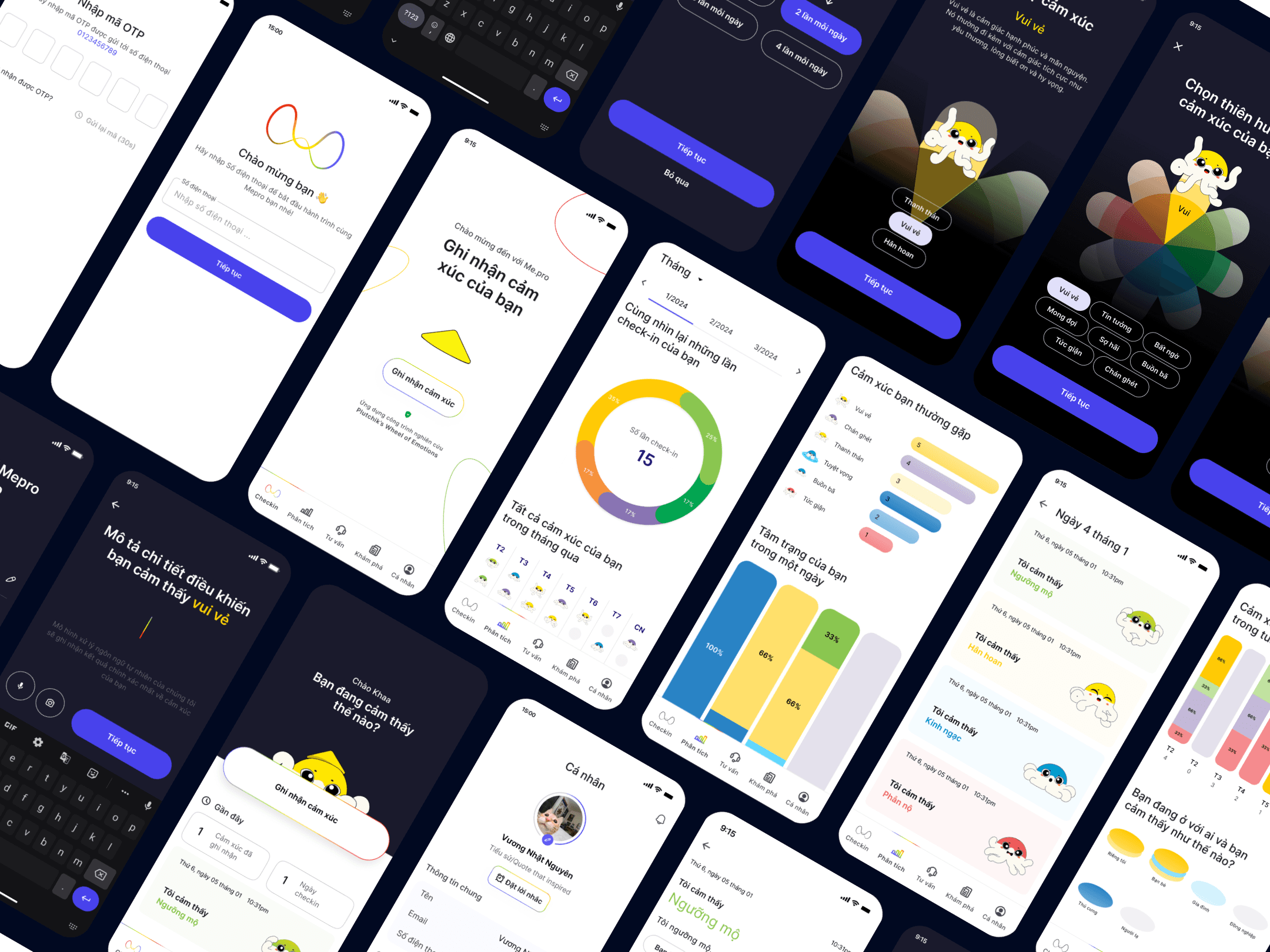
We anchored the check-in experience around the Plutchik Wheel - a psychology-backed model that gives users a precise vocabulary for what they're feeling, without requiring them to find the words themselves.
The core flow was designed to be as short as possible: open the app, identify the emotion, optionally add context, done. Every feature - recording, reminders, reports - was built around protecting that loop, not interrupting it.
The visual direction followed the same logic: calm, unhurried, with enough breathing room to make the act of checking in feel like a pause rather than a task.