Mobile
Travel planning in Vietnam is fragmented. Users jump between apps for inspiration, information, and booking - and none of them understand how Vietnamese people actually travel: spontaneously, in groups, driven by mood and seasonal moments rather than structured itineraries.
Global platforms compound this with auto-translated content, generic recommendations, and no real grasp of local destinations. The result is an experience that feels borrowed rather than built for the people using it.
Competitive analysis across existing travel planning apps - both global (Airbnb, Klook, TripAdvisor) and local - revealed a consistent gap: the inspiration-to-booking journey was always broken. Users had to leave one app to act on what another one showed them.
Beyond the functional gap, there was a cultural one. Vietnamese travel behavior — holiday-specific trips, group dynamics, emotion-driven spontaneity - wasn't reflected in how any of these products were designed. That became the core design opportunity.
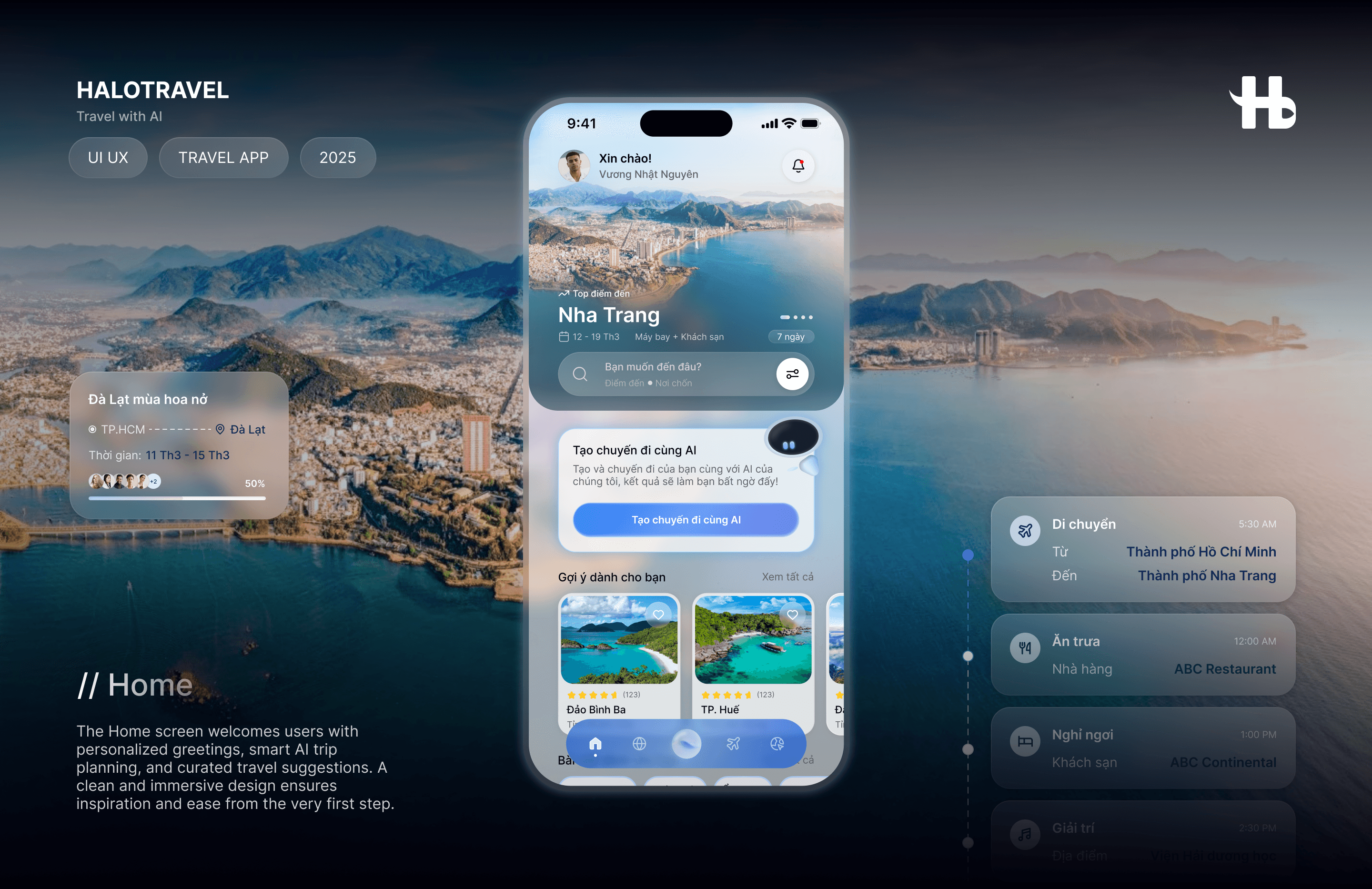
The design was built around one principle: keep the user in the flow from the moment inspiration hits to the moment they book.
The AI trip planning feature sits at the center of the experience - conversational, fast, and low-friction. Users describe where they want to go or how they're feeling, and the app builds a trip around that. Every other feature - discovery, tours, itinerary management, booking - connects back to this core loop rather than existing separately.
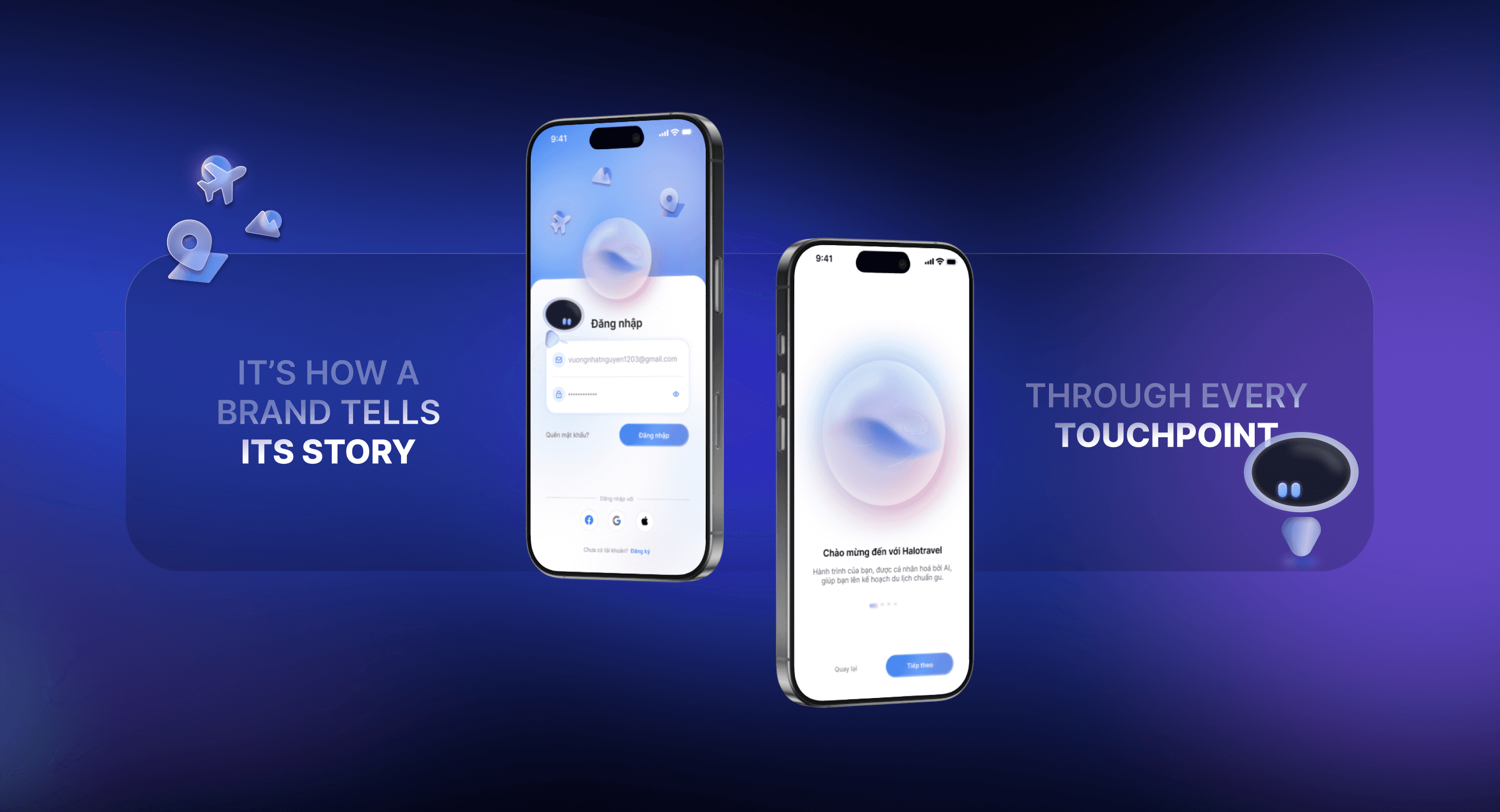
Visually, the direction was warm and immersive: destination photography as the primary canvas, UI that stays out of the way until it's needed. The onboarding was designed to establish personalization from the first screen, so the app feels tailored rather than generic from day one.